




How to reach
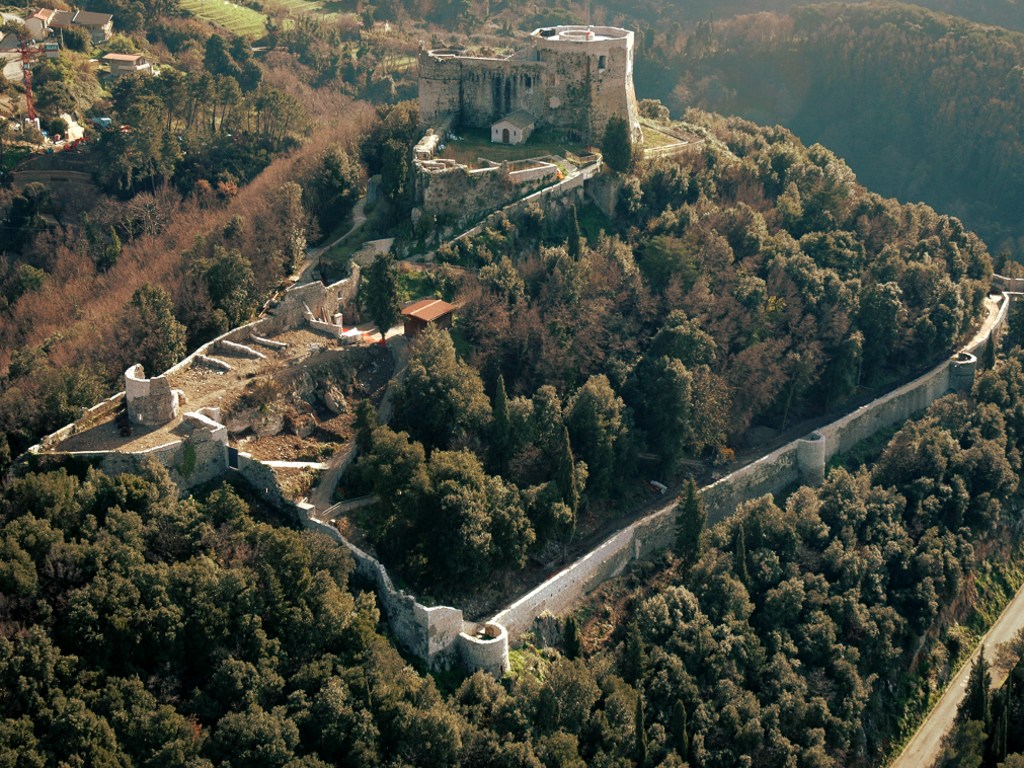
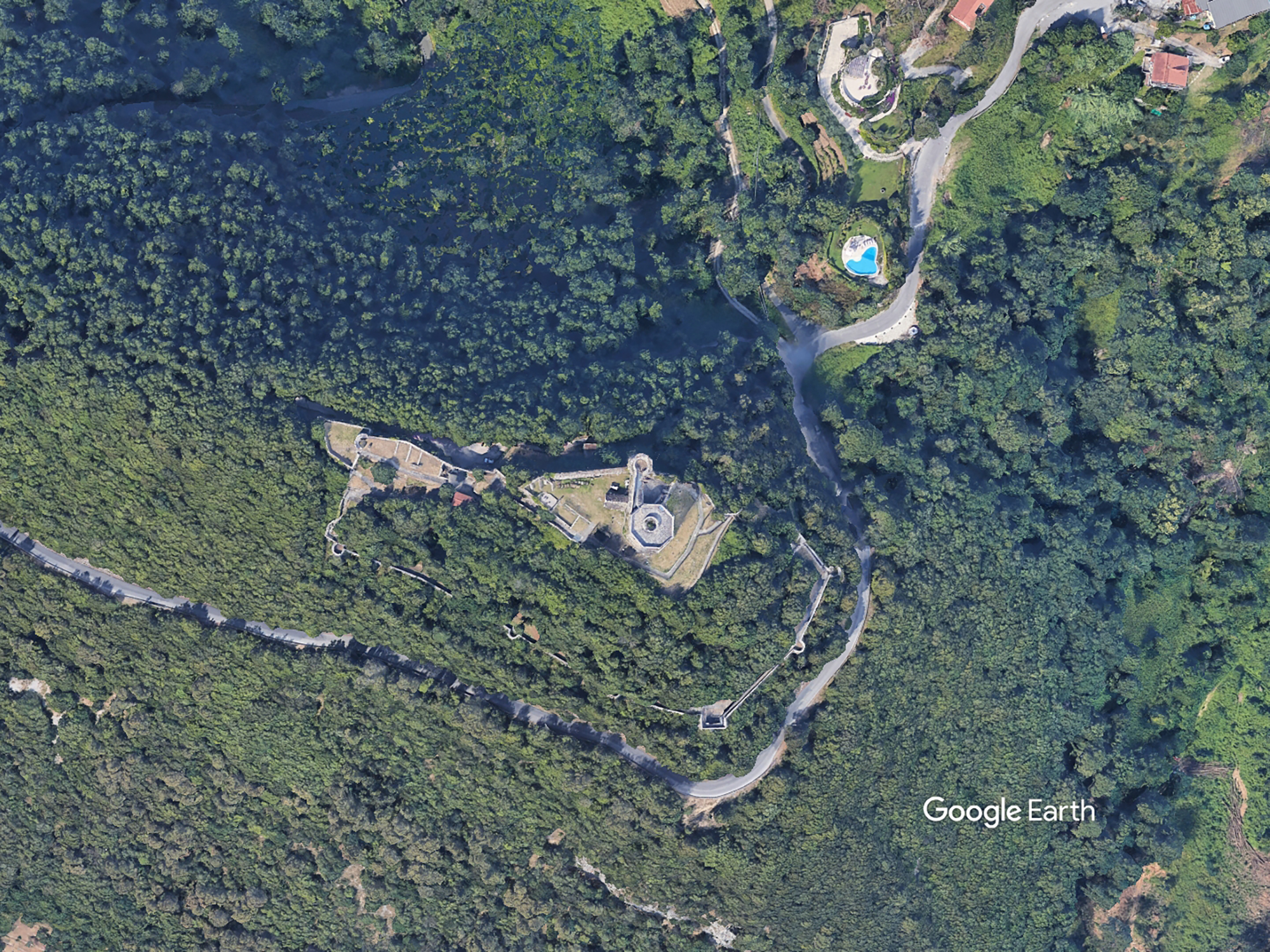
The castle of Aghinolfo rises above the country of Montignoso, around three kilometers south from the center of the city of Massa in the northwest of Tuscany.
History
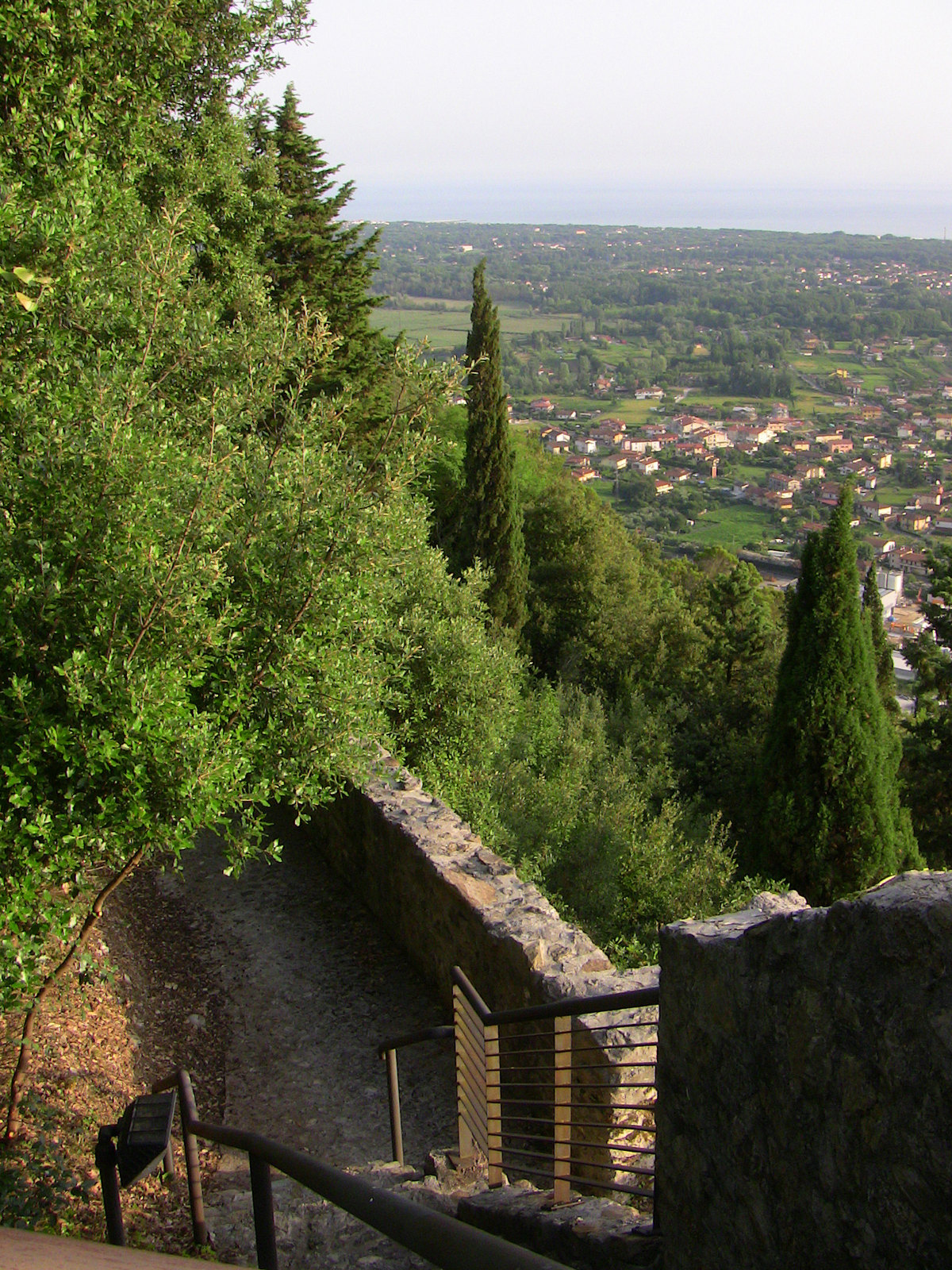
Montignoso is one of the smallest communes of Lunigiana (the name of this part of Tuscany), but has always played an important part in history. This is thanks to its position on top of a hill from which it dominates the valley below, which is crossed by a stream. Its position also allows it control the Tyrrhenian coast, which is only four kilometers away.
The Castle is first mentioned in documents of the year 753 A.D., when the Longobard king Astolfo made a gift to one of his brothers-in-law, the abbot founder of the abbey of Nonantola near Modena, of a piece of land in this area. From the name 'Aghinolfo' came the clear Longobard origin of the castle, even if it's not sure that its foundation was effected by the King in person or by a vassal of him, while it's certain that the zone of Montignoso belonged at that time to the crown.
Certainly, the castle was the most powerful of the valley and a shelter for all the populations of the zone in case of danger. Clearly, traces of the fortification of that time haven't yet remained, having been reconstructed many times in the following centuries.
The descendants of Aghinolfo remained in possession of the castle up to the year 1376; subsequently, the fortification passed to the city of Lucca, which provided the reparations and necessary improvements to make it a strong outpost against the gangs formed by the soldiers of fortune and the various Republic enemies that infested the area.
Thanks to the writings of Giovanni Sforza, a historian of the last century, we have an exact description of the aspect of the castle in 1494, when it was given to Charles VIII, king of France. On the fortification rose two tall towers, called one 'tower of S.Francesco' and the other 'of S.Paolino', and the walled area was extended for around an hectare. This area was divided into three fortified enclosures.
In the first ward were 43 buildings, used as refuge by the inhabitants of Montignoso during periods of war or as storehouses in times of peace. In the second enclosure, which was accessed through a drawbridge, there were other 87 houses, while in the third and last, on the top of the hill, rose up the core of the fortification.
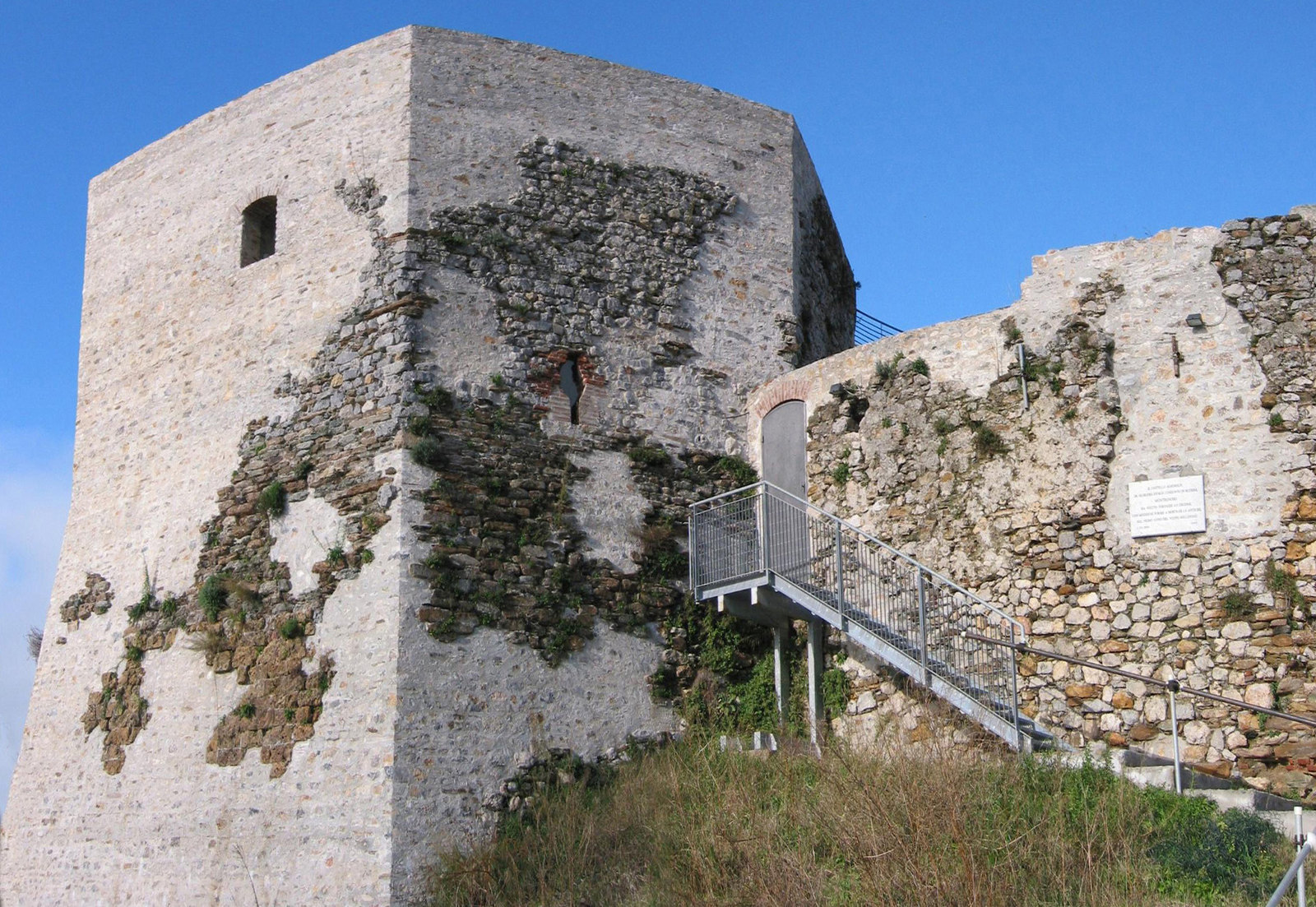
This was composed of a big octagonal tower, the 'Mastio' or keep, connected to a round tower by stone curtains. Between the endowments of the castle were a big cistern that collected rainwater and provided water supply for the fortress, a chapel, a mill, and a secret passage that was brought outside from the tower.
It doesn't mean that the mighty fortification has ever been conquered, but the lack of maintenance and the years of abandonment have reduced it to a ruinous state. In the 16th century, malaria struck the zone harshly and caused a strong decrease in population, but the castle suffered the hardest damage in 1799, when, after it was abandoned by the Lucchesi in consequence of the Giacobine invasion, the inhabitants began to steal the wood of the beams, of the doors and windows, the stones, and the bricks of the curtain walls to use them in their own houses.
Some time after the new Lord of Lucca, Carlo Ludovico di Borbone, bought the castle with the intention to restructure it, this remained the only intention ever put into work. Today we are still able to admire the mighty ruins; fortunately, in the autumn of 1998, an important work of restoration started.
On April 1, 2001, the castle was finally returned to the local community and visitors after a long restoration carried out by the Municipality of Montignoso with a project entrusted to the architects Nicola Gallo, Antonio Silvestri, and Andrea Tenerini. Inside, a glass floor shows the stratigraphy of the original flooring and some ancient objects found there. On this occasion, inside the restored keep was also a multimedia permanent installation that explains the development stages of the castle with animated reconstructions. In 2008, also the last restoration work was finished, making possible to access the 'archaeological park' built inside the outer walls of the castle.
More info & notes
 Visits at Castello Aghinolfi - Montignoso.
Phone: +39 0585 816524 (Monday to Friday from 9.30 am to 13.30 pm)
Email: info@istitutovalorizzazionecastelli.it
Internet: www.istitutovalorizzazionecastelli.it