How to reach
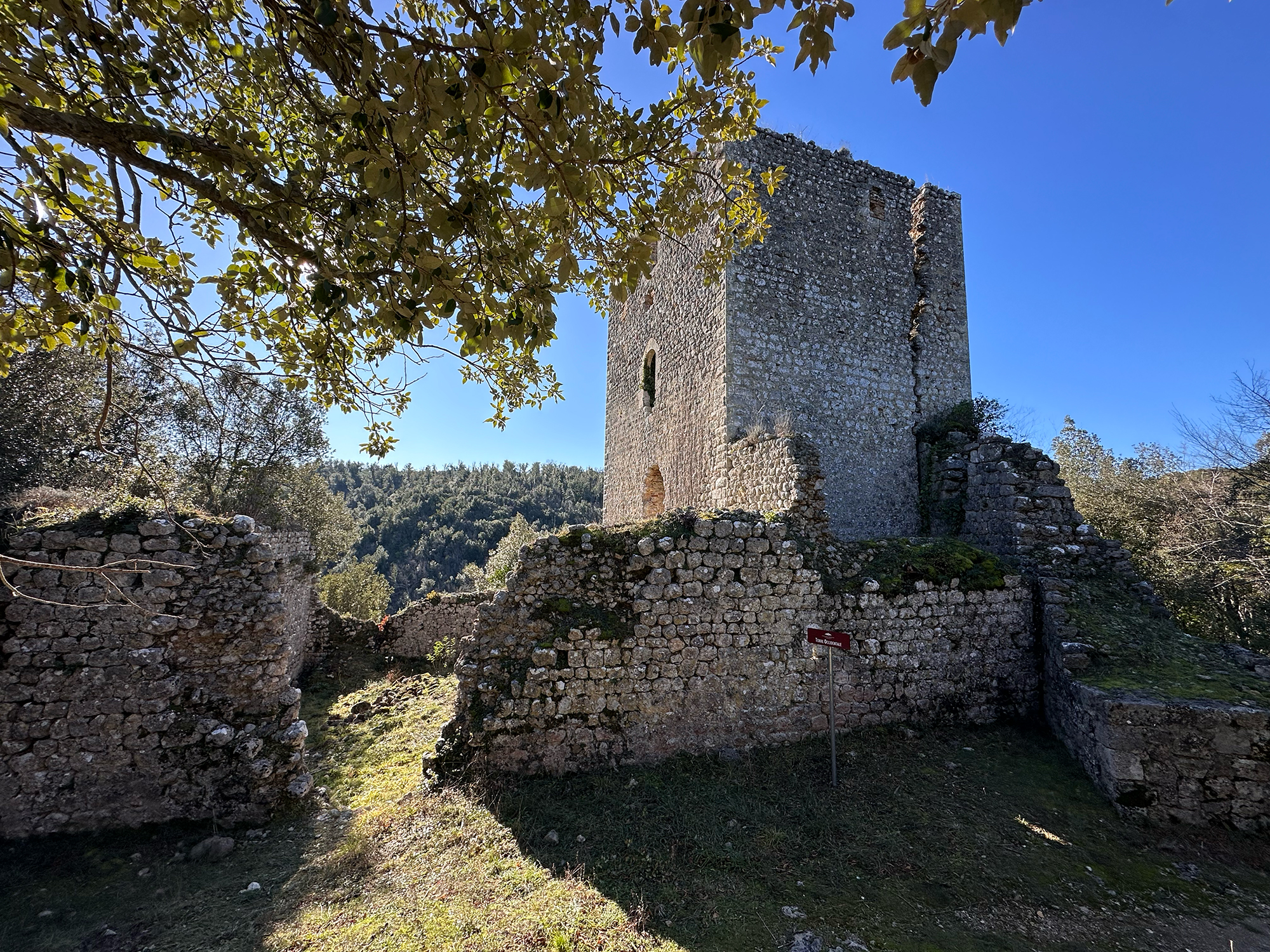
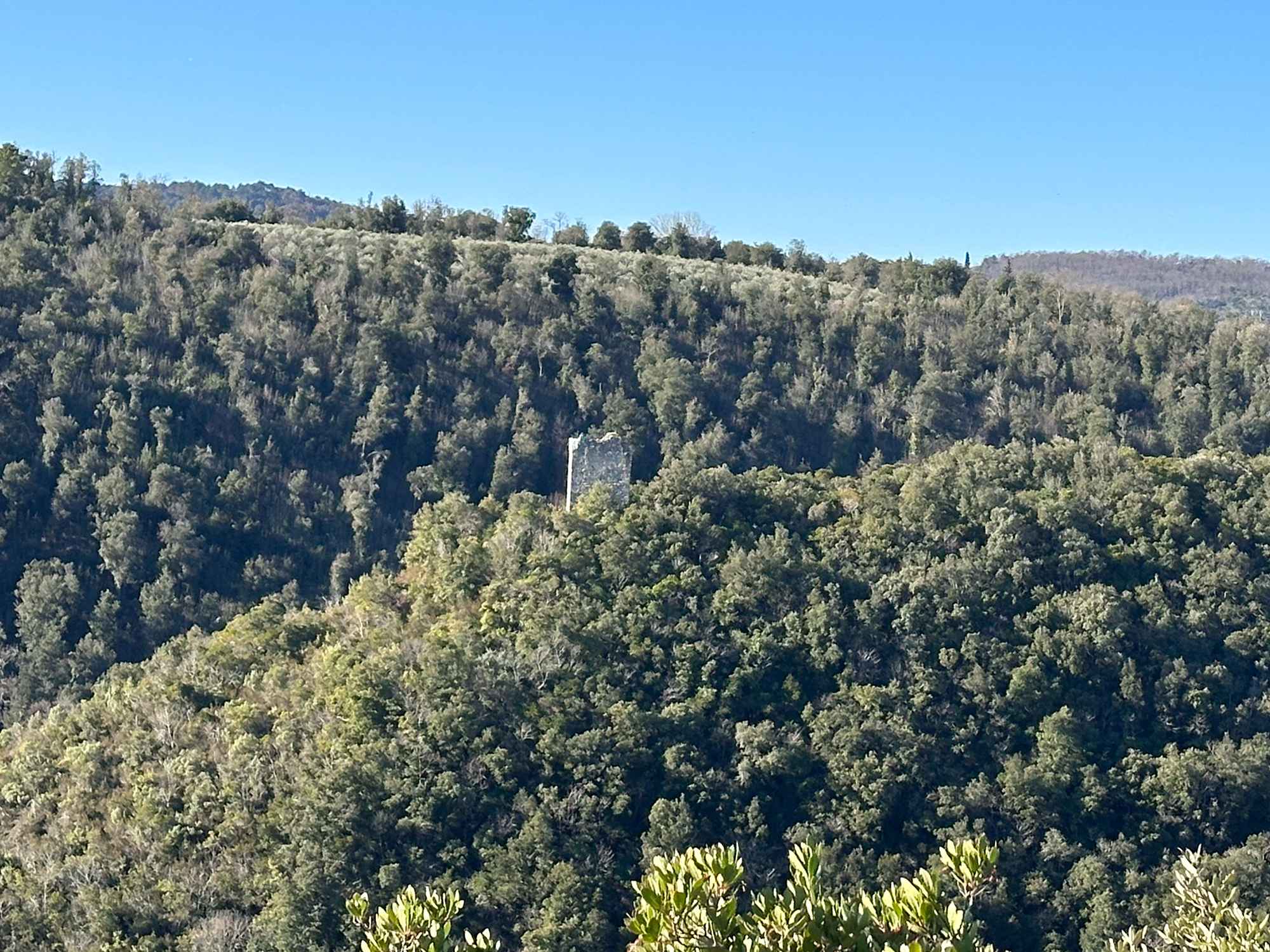
On the road connecting San Gimignano to Castel San Gimignano (SP47), near the village of San Donato, take a dirt road – on the right if coming from San Gimignano – following the signs for the Riserva Naturale di Castelvecchio/Il Caggio. Leave your car in one of the available pull-off areas along the route and continue on foot along the dirt road. At a certain point you will find a sign for a 'Panoramic Viewpoint': It is not strictly necessary to take a detour, as the Keep is clearly visible from the main path; from the viewpoint, however, you can clearly see the South Tower.
Upon reaching the area known as Il Caggio, near the Castelvecchio Estate, take the path on the left, which begins to descend into the woodland until it crosses the Botro di Castelvecchio stream. After the ford, a short ascent leads to the archaeological site, which can be reached via a clearly signposted detour from the main trail.
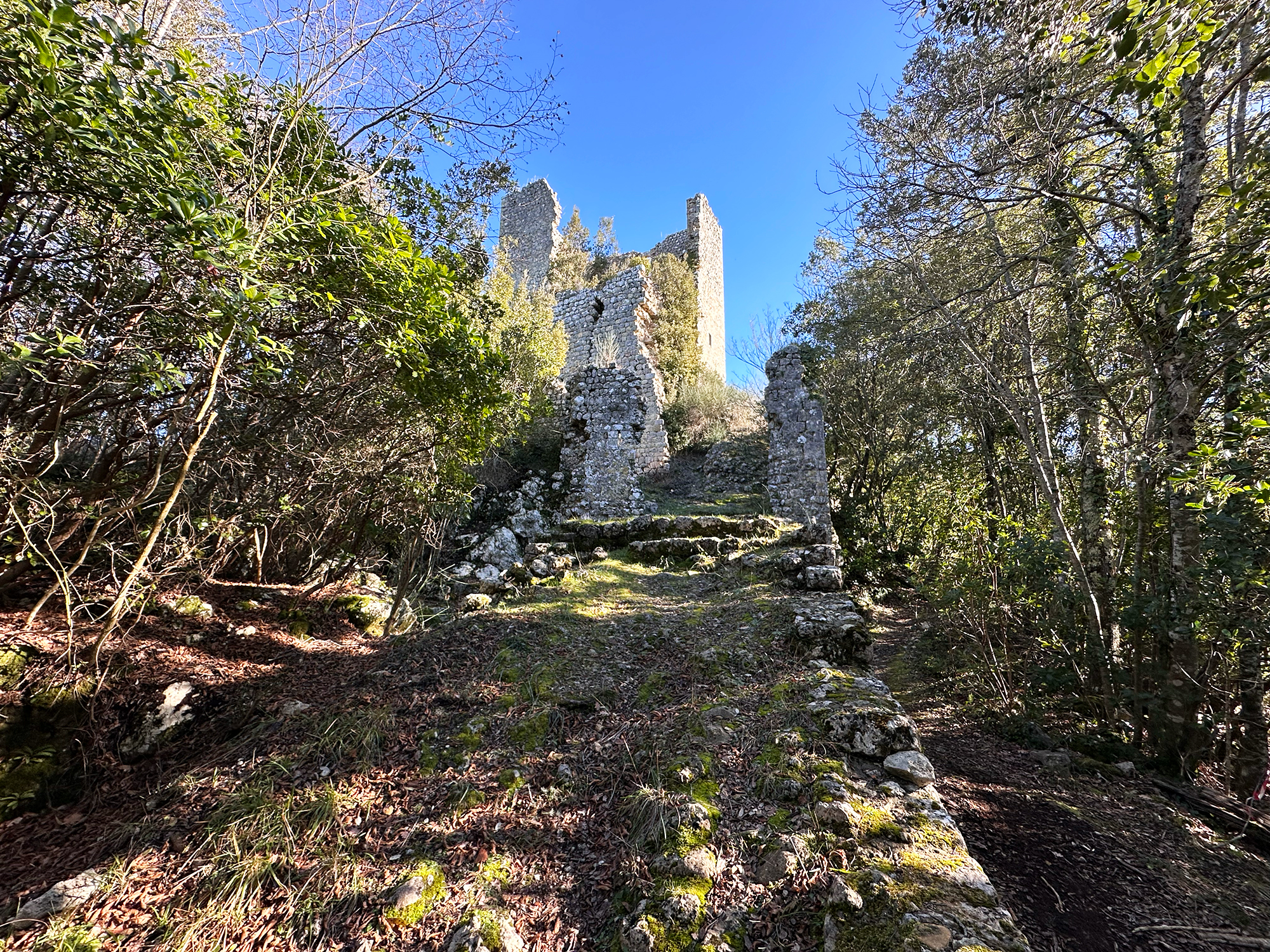
Access to the fortified village is blocked by a chain, which is easy to step over, as the area is private property. The overall route, out and back, is approximately 5 kilometers long, with an elevation gain of about 200 meters, making it suitable for hikers with a minimum level of experience walking on dirt paths.
History
Castelvecchio: a medieval fortified citadel
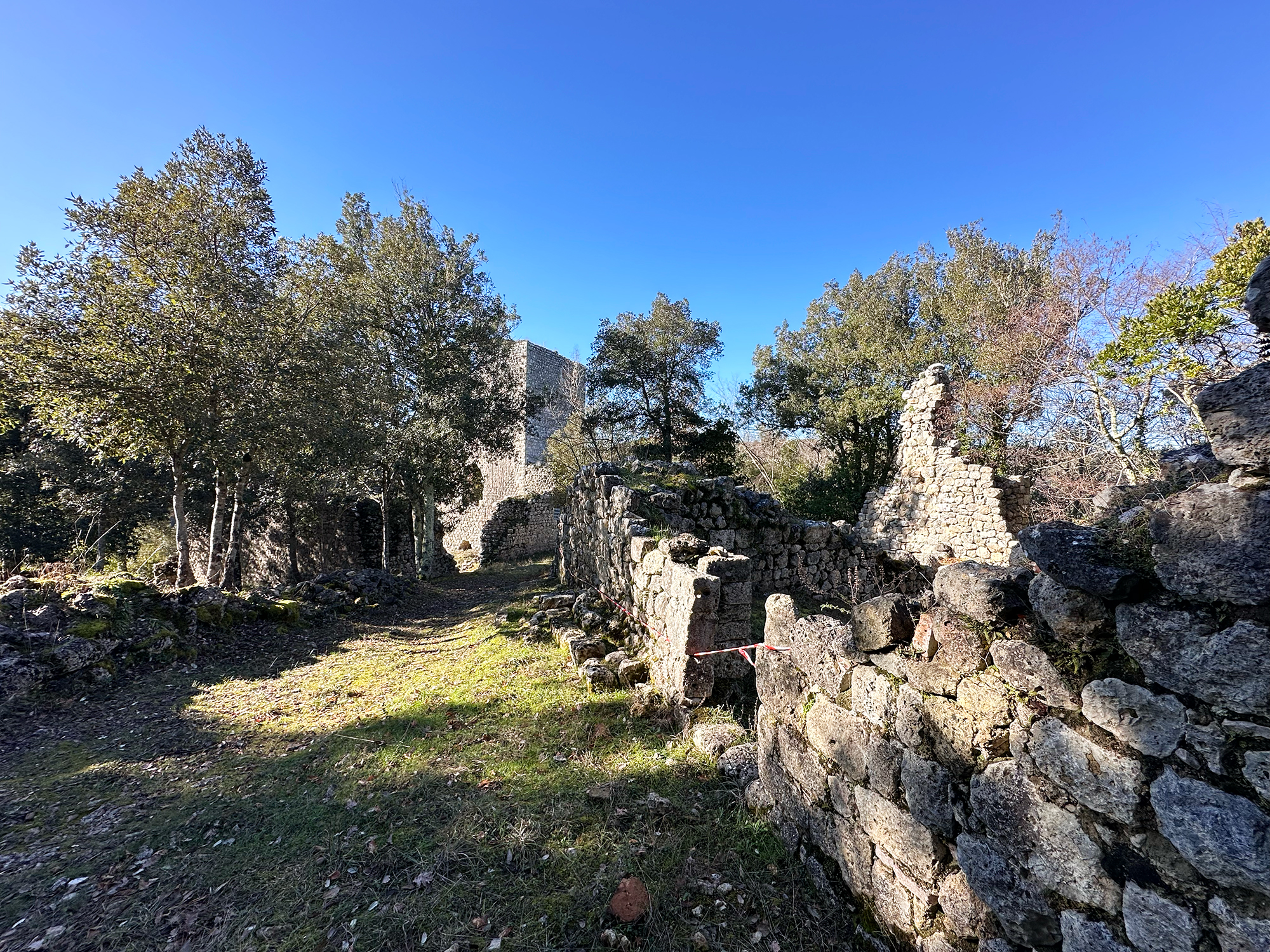
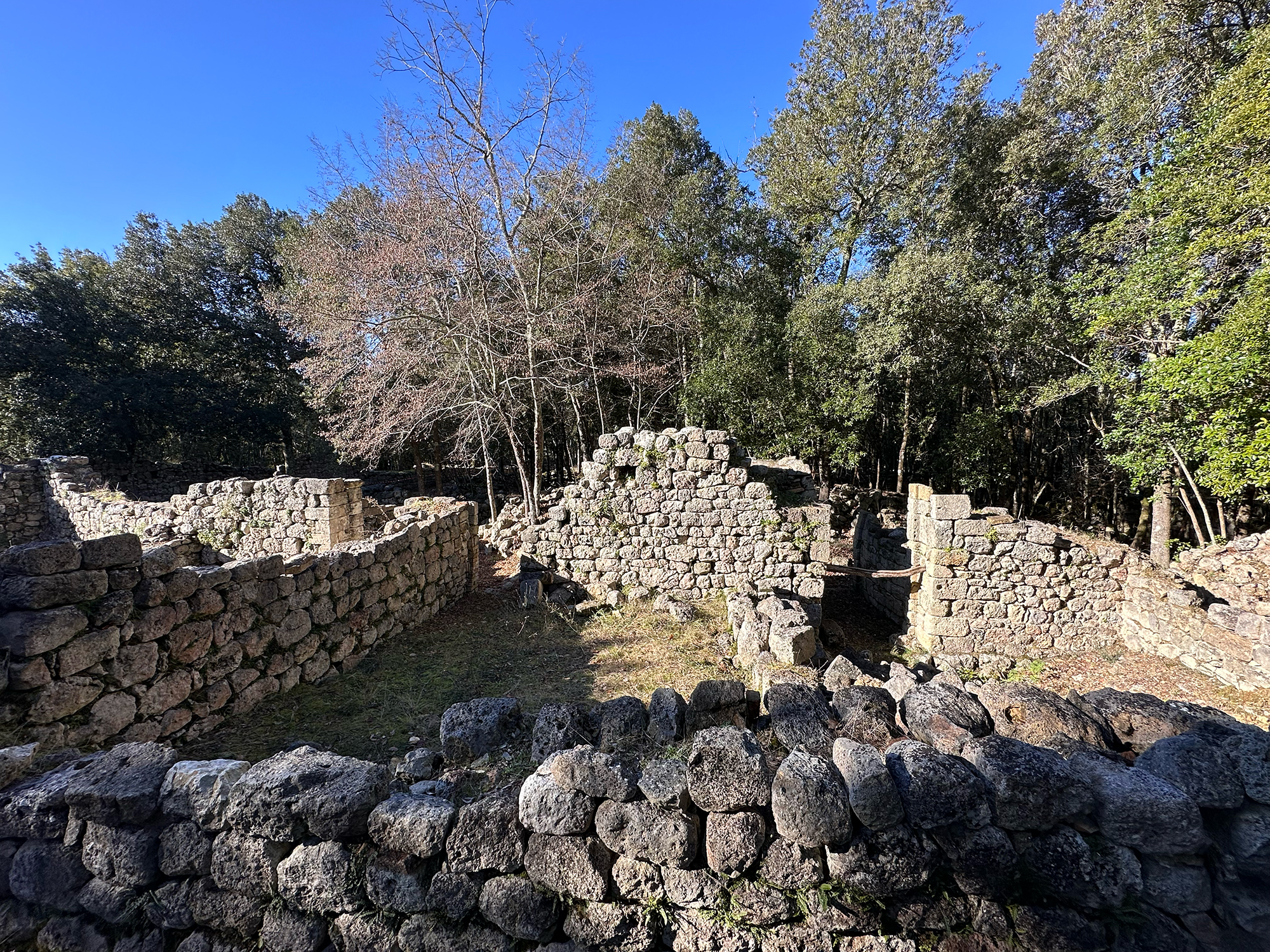
Defining Castelvecchio simply as a “castle” is reductive: it is in fact a medieval fortified citadel, a true self-sufficient settlement with a complex urban structure, composed of defensive systems, civil and religious buildings, internal roads, mills, warehouses, and a monumental cistern for collecting rainwater.
Origins and strategic location
Castelvecchio rises on a naturally defended limestone hill, between San Gimignano and Volterra, in an area frequented since antiquity. The hill was probably a sacred rocky site in the Etruscan period and, after a phase of abandonment in Roman times, was re-fortified by the Lombards, who recognized its high strategic value.
The Castrum Vetus and the Middle Ages
The earliest medieval records date to the first half of the 12th century, when the settlement is documented as Castrum Vetus. Even at this stage, Castelvecchio already displayed the characteristics of an advanced fortified center.
In 1210, the Bishop of Volterra transferred his rights over the village to the Commune of San Gimignano, establishing a political and military bond destined to last for more than a century.
Peak development in the 13th century
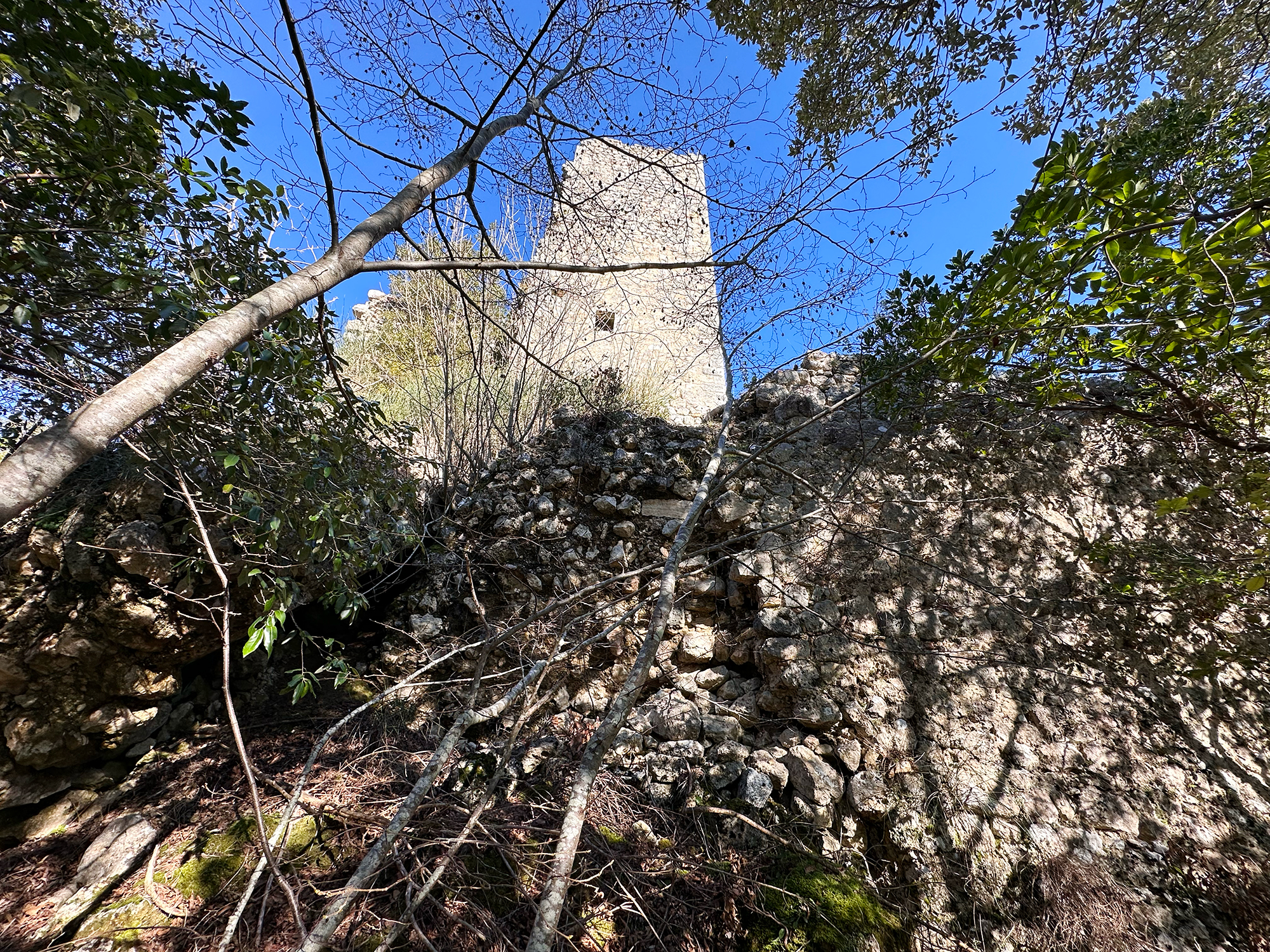
During the 13th century, Castelvecchio reached its peak. The citadel was equipped with an elliptical curtain wall approximately 600 meters long, built with blocks of Castelvecchio stone, a material quarried locally and also valued in nearby towns.
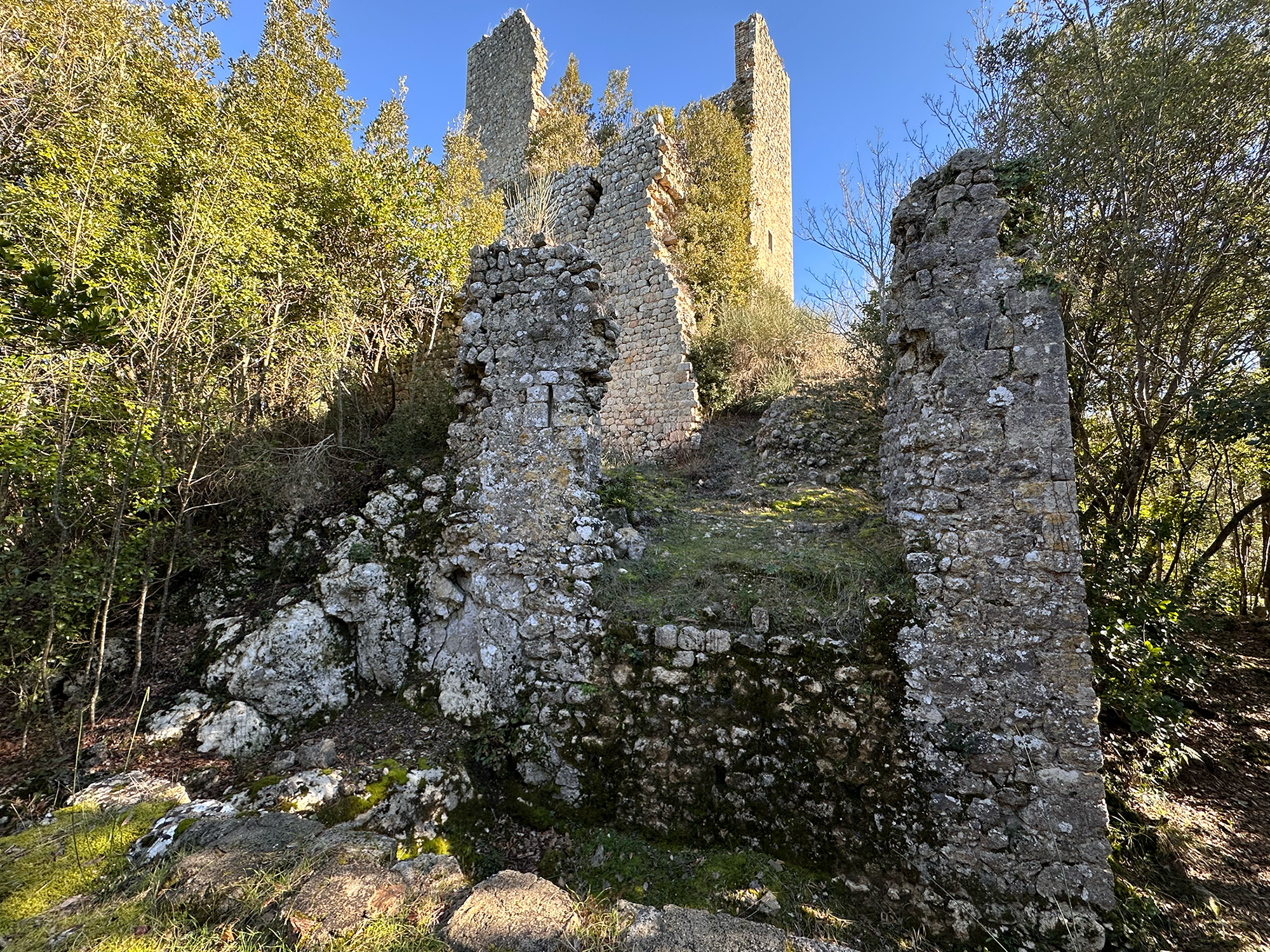
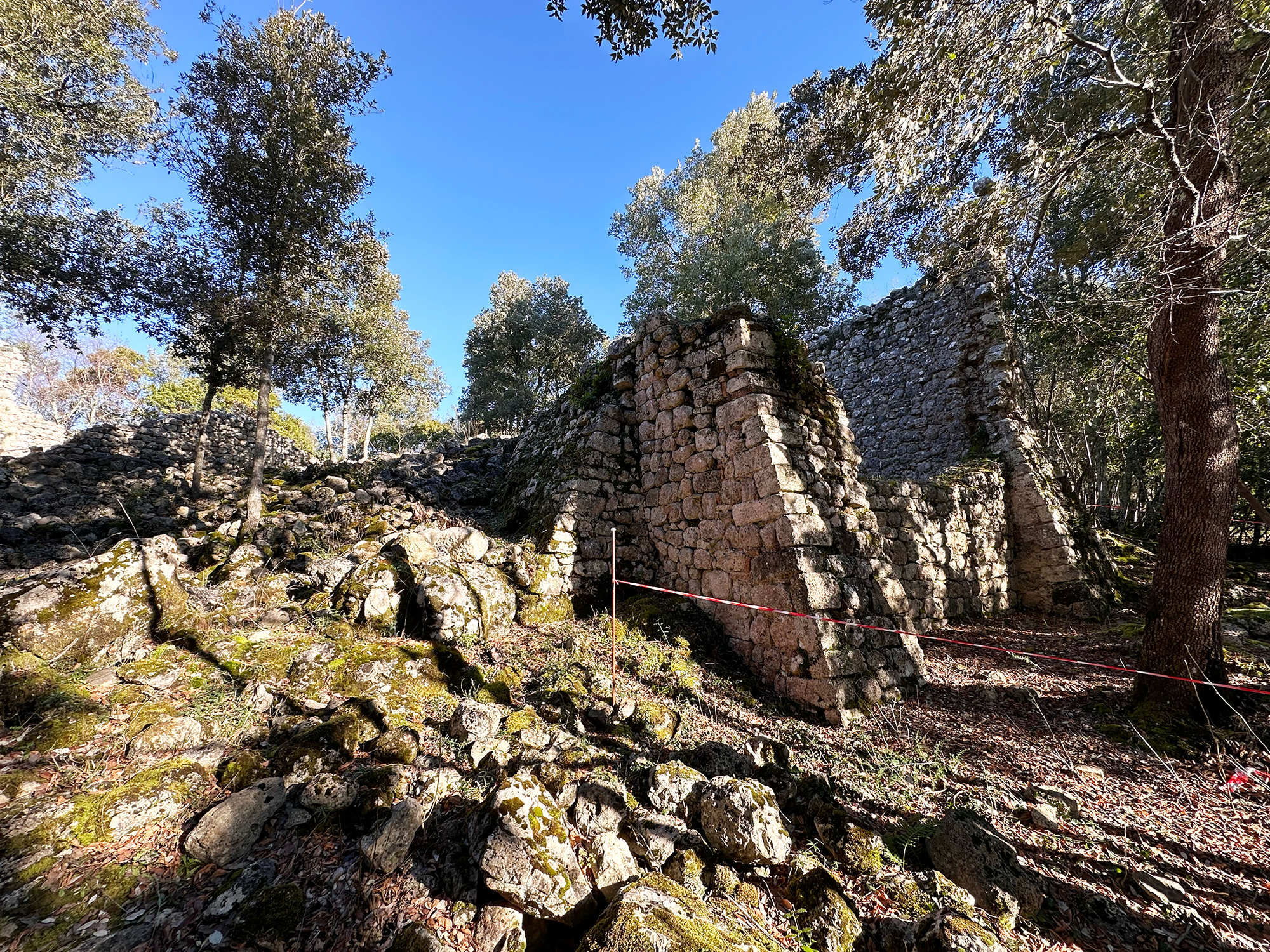
The walls were reinforced by square towers placed at regular intervals and by wall-walks, some of which are still partially recognizable today.
Entrances and military structures
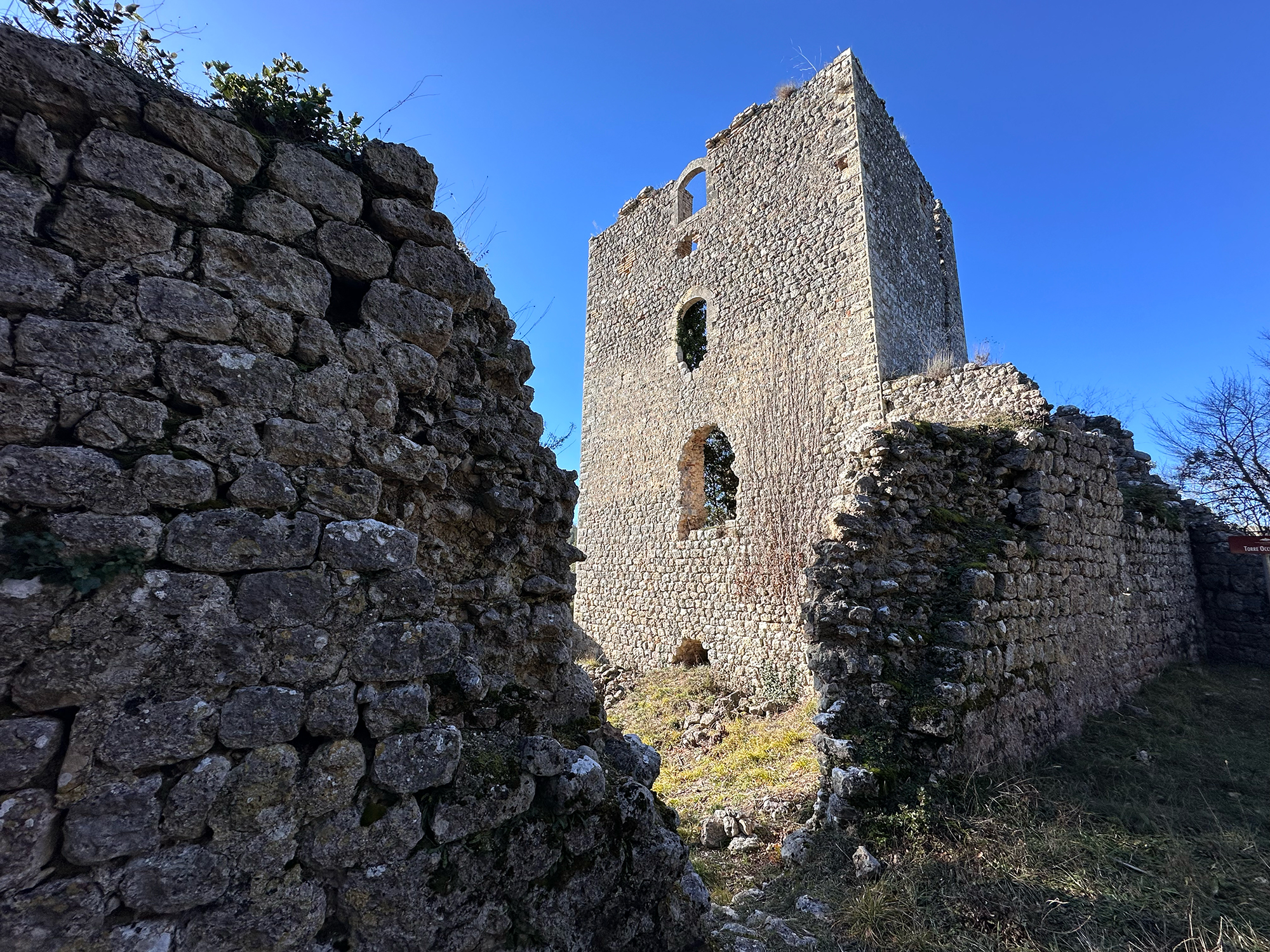
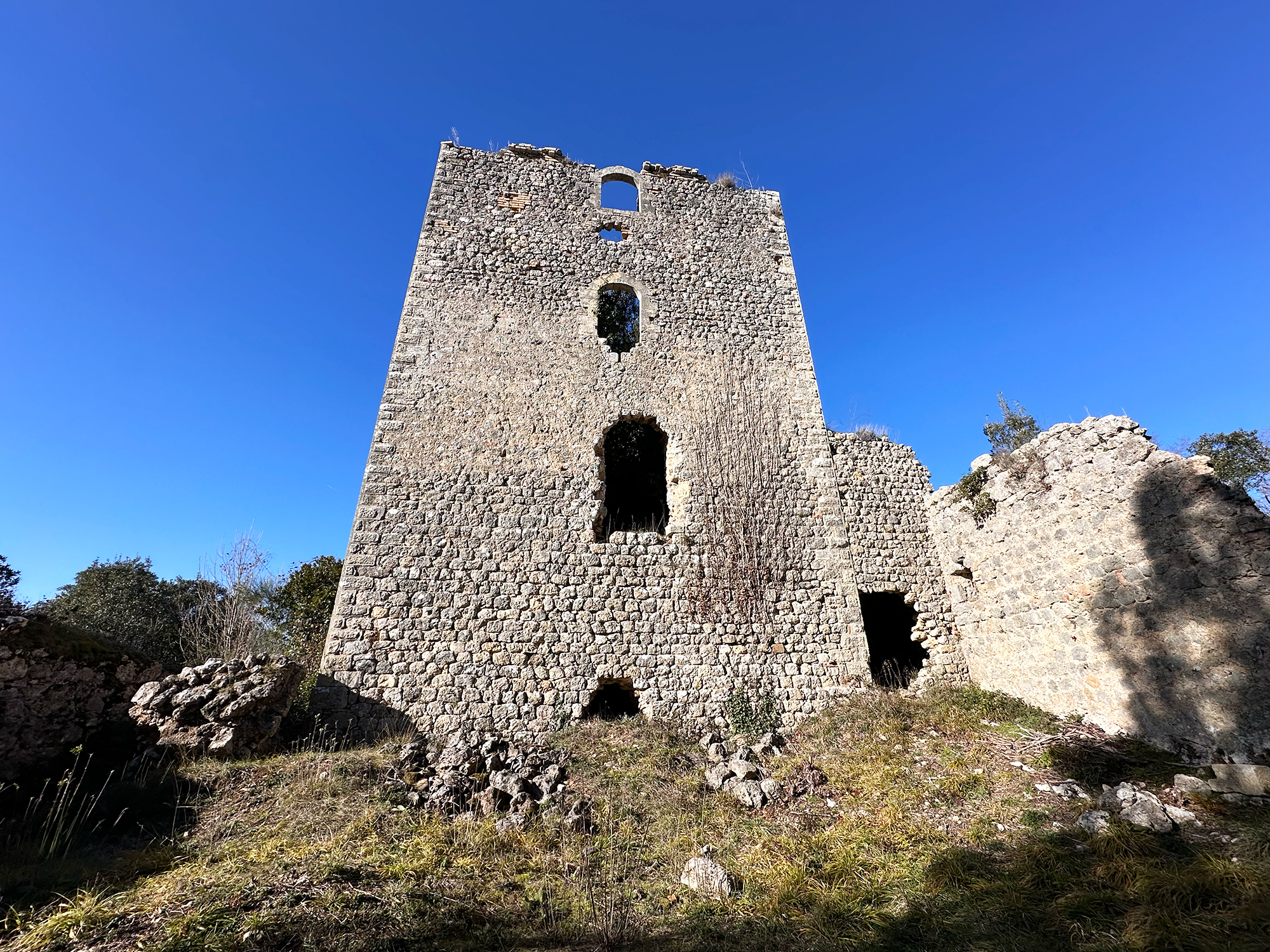
Access to the settlement was through a fortified gate, protected by a tower and probably equipped with a drawbridge. In a dominant position stood the square keep, the true core of military power, rebuilt in the 15th century but based on older structures.
From the keep, both the interior of the citadel and the surrounding countryside could be controlled.
Urban organization
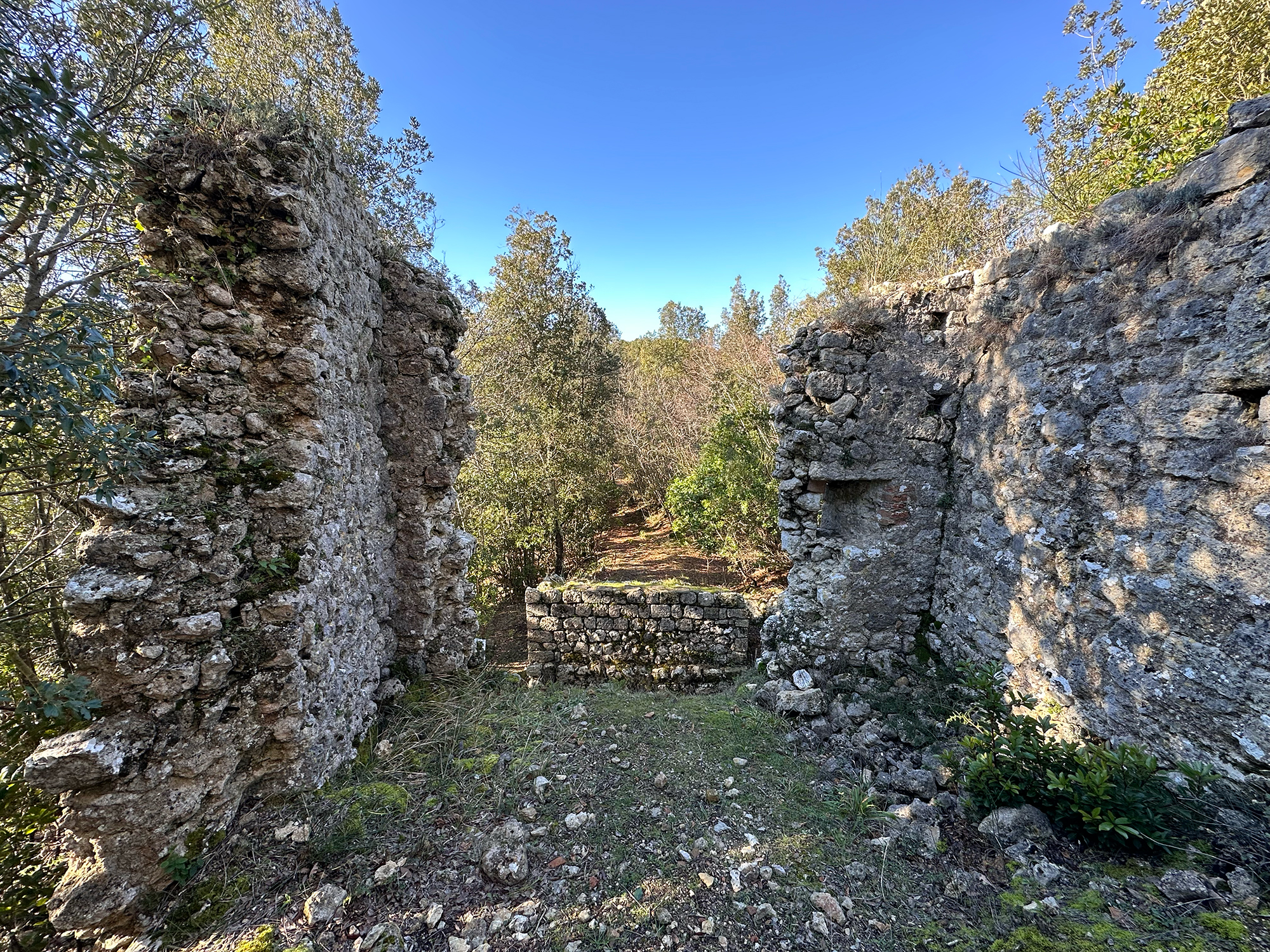
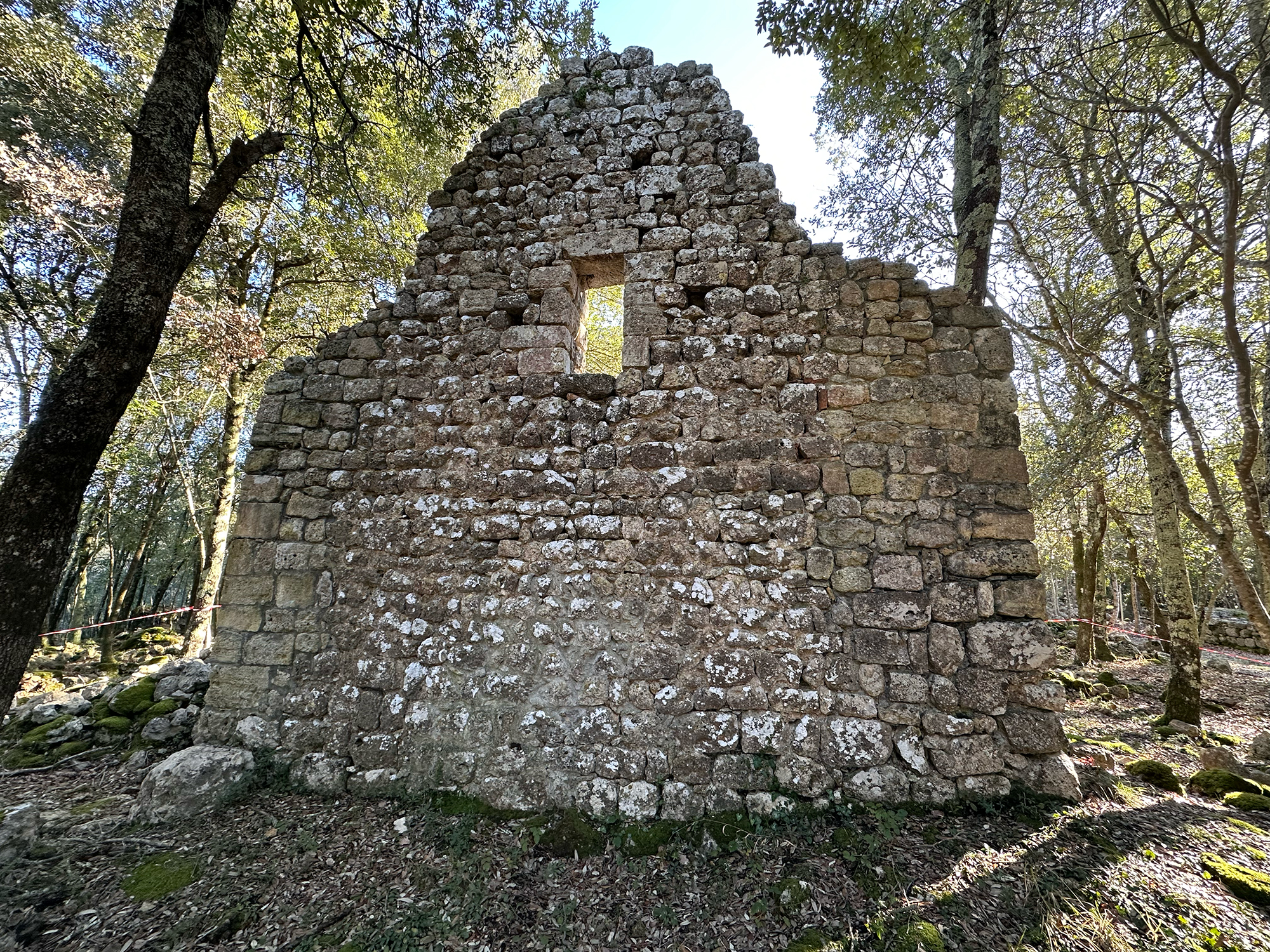
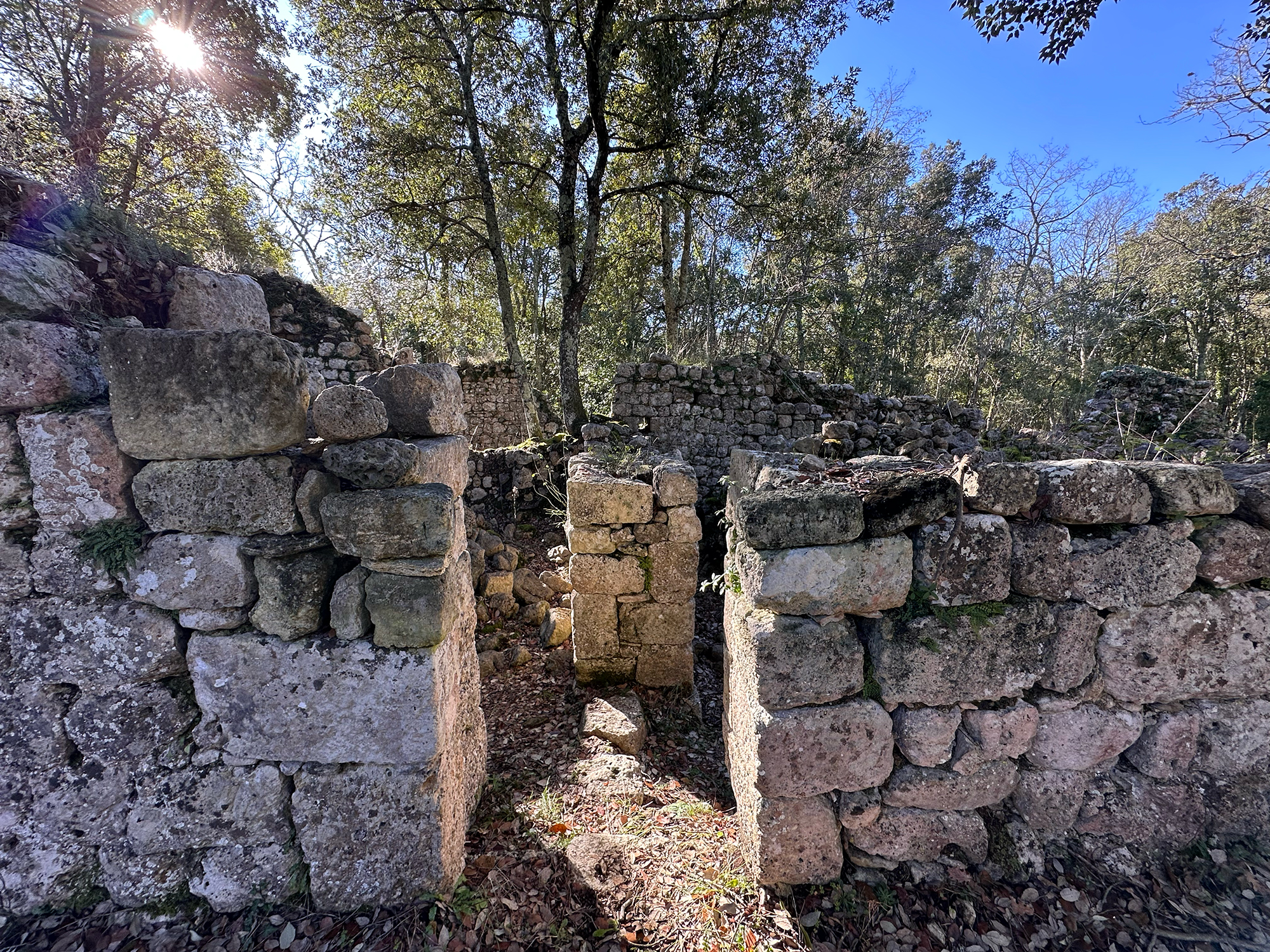
Within the walls developed an orderly urban layout, with a main paved street running through the settlement. Along it stood dwellings of different types: simple houses for farmers and artisans, more articulated buildings for higher-ranking families, as well as warehouses and service spaces.
The overall layout suggests a stable and organized community, capable of accommodating up to approximately 500 people in times of need.
The Church of Saints John and Fredianus
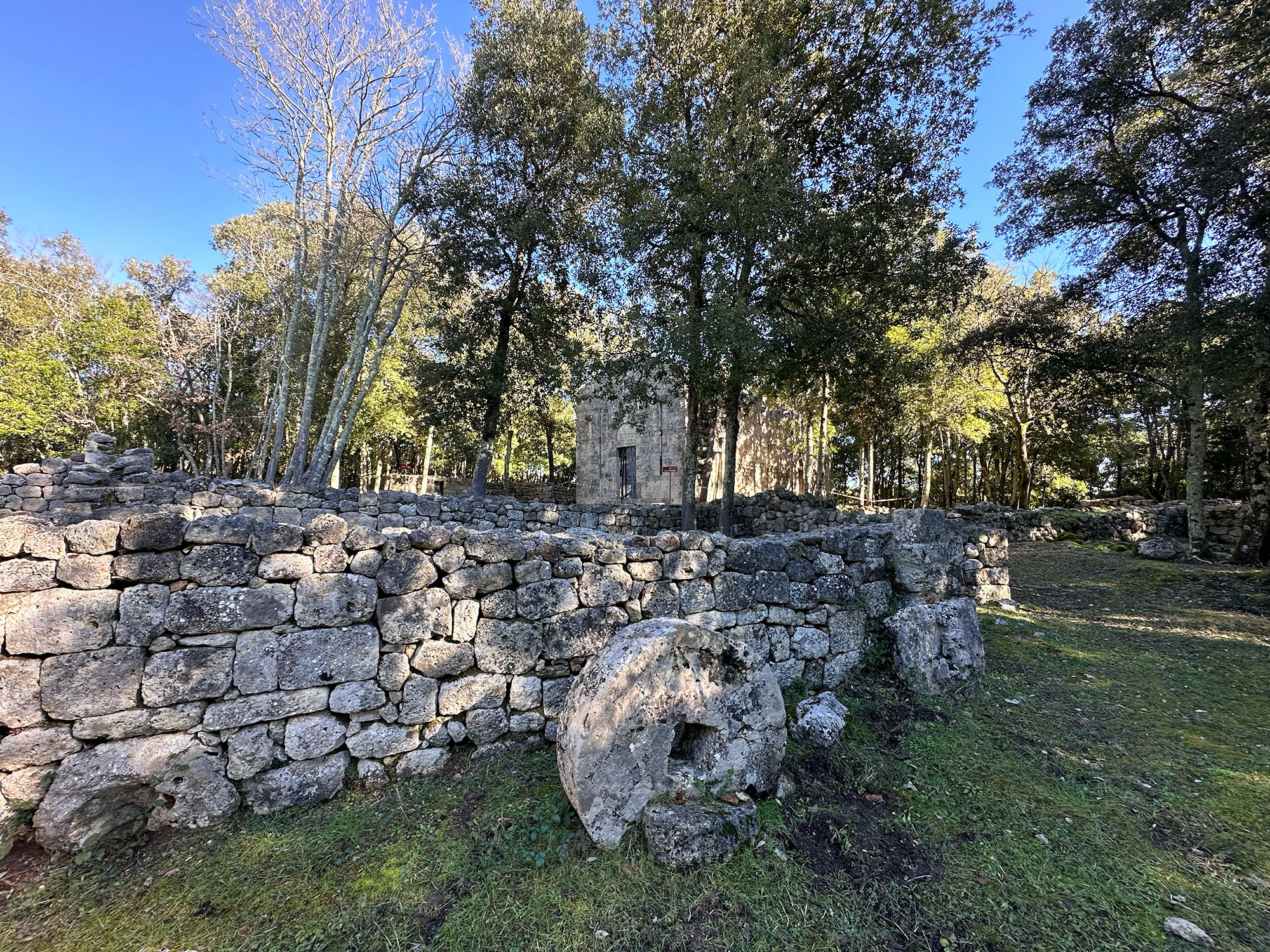
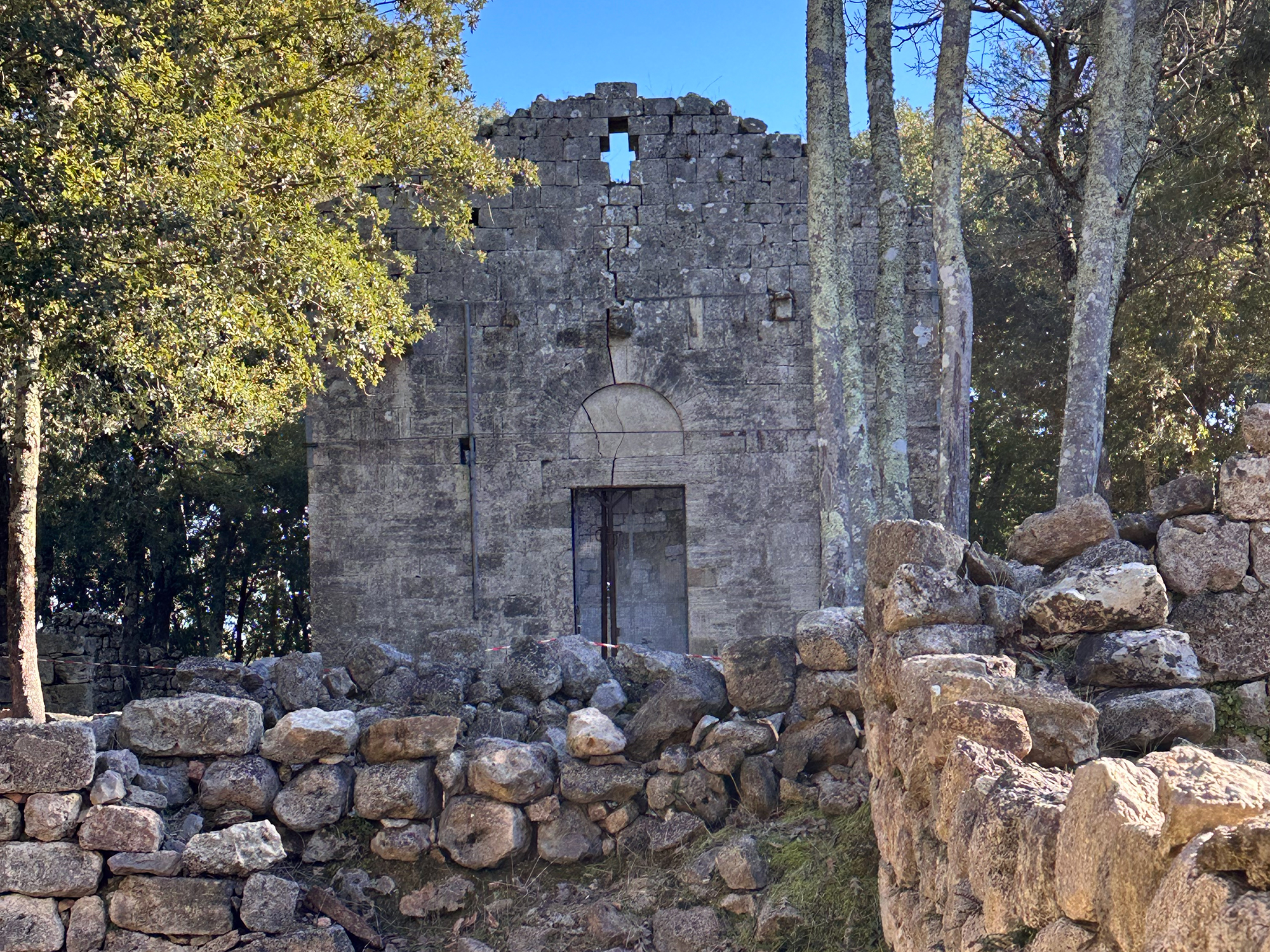
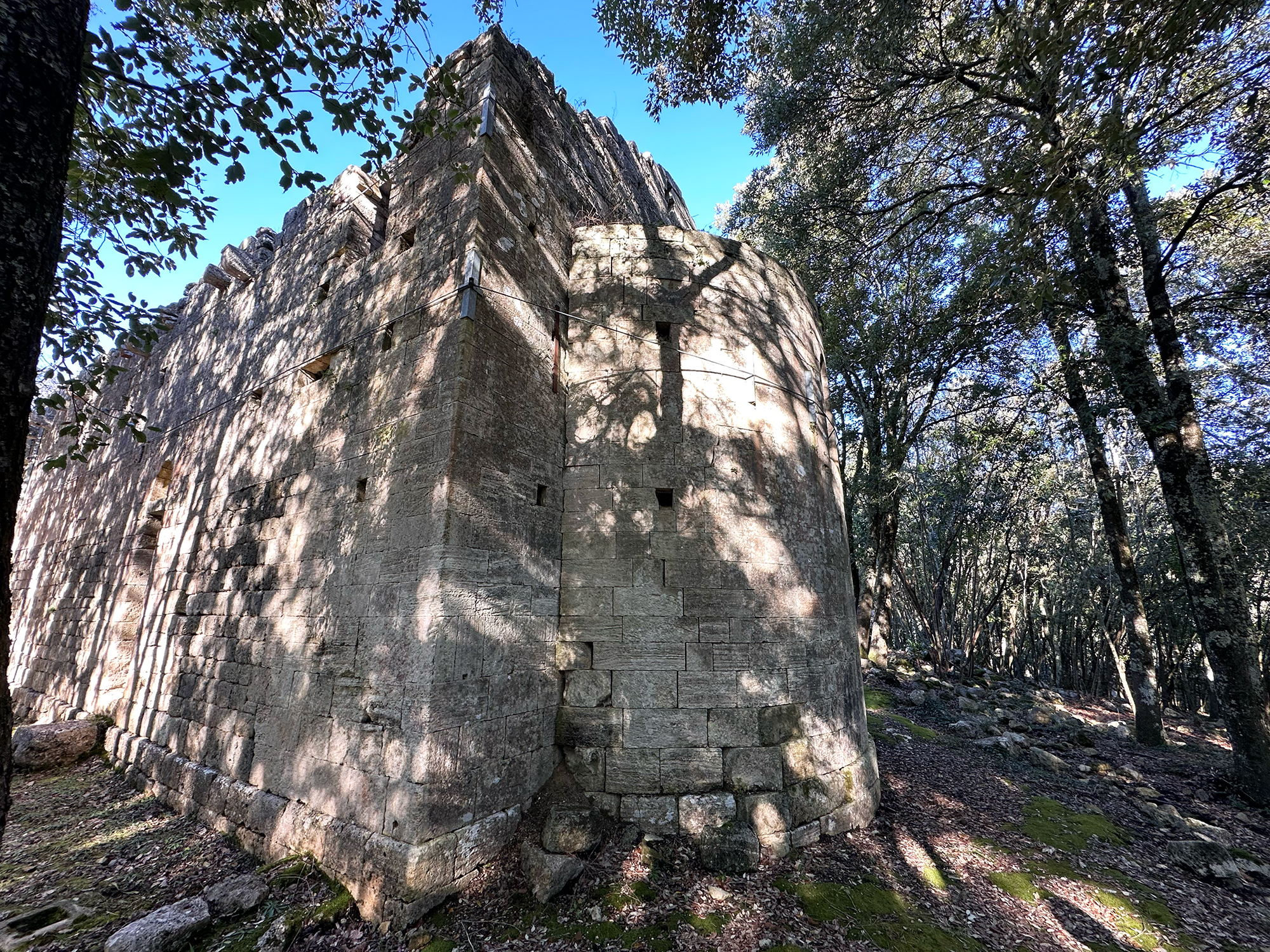
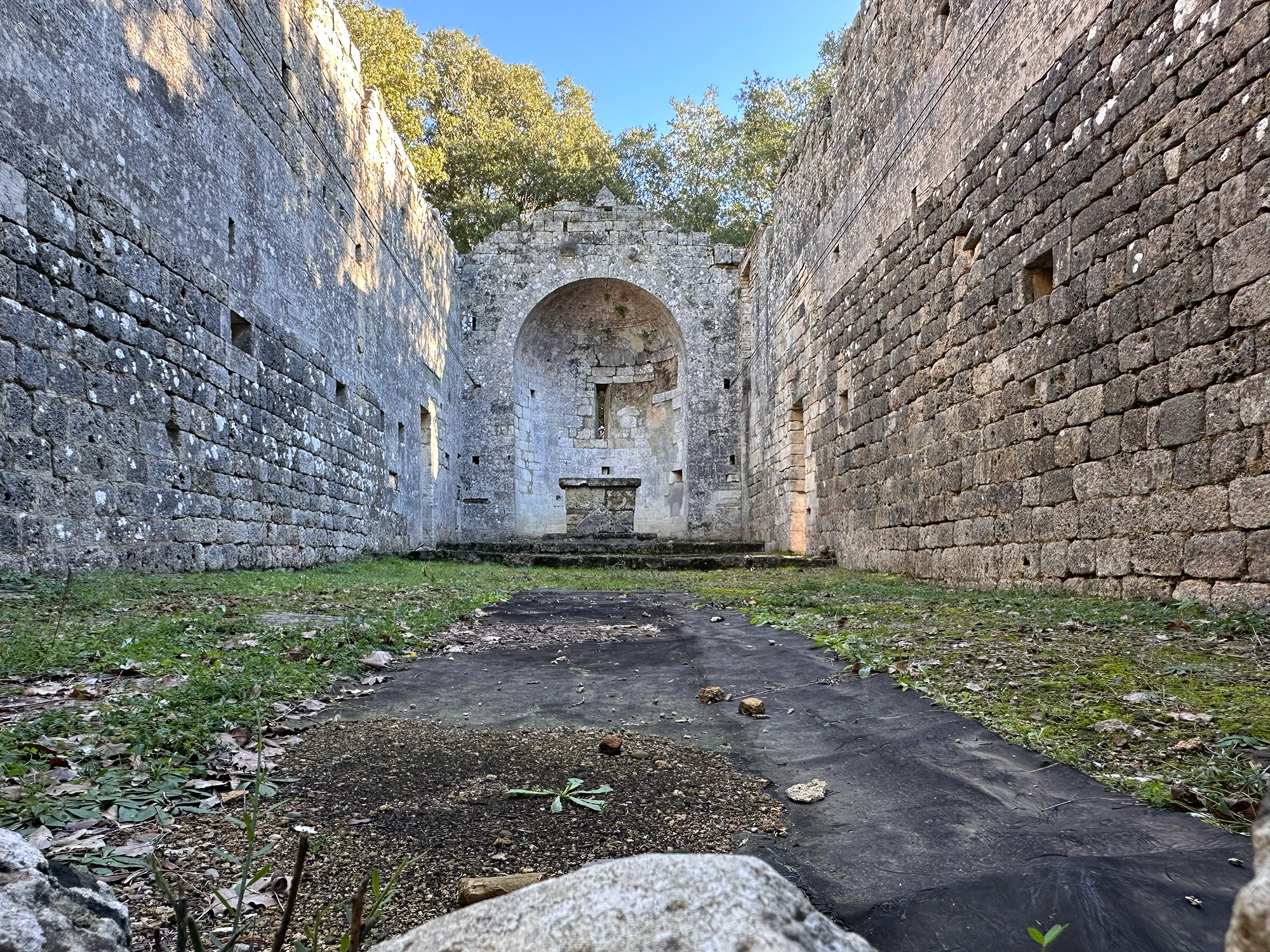
Of great architectural significance is the Church of Saints John and Fredianus, located near the central area of the settlement. Of the structure, the apse and part of the perimeter walls remain; within the apse, traces of frescoes dating to 1275 are still visible, a rare element in a fortified rural context.
The church represented the center of spiritual power, in direct dialogue with the feudal authority embodied by the keep.
The water system and productive activities
Essential for survival during sieges was the water system. Castelvecchio was equipped with a large underground cistern, capable of collecting up to 60,000 liters of rainwater, connected to roofs and paved surfaces through a network of channels.
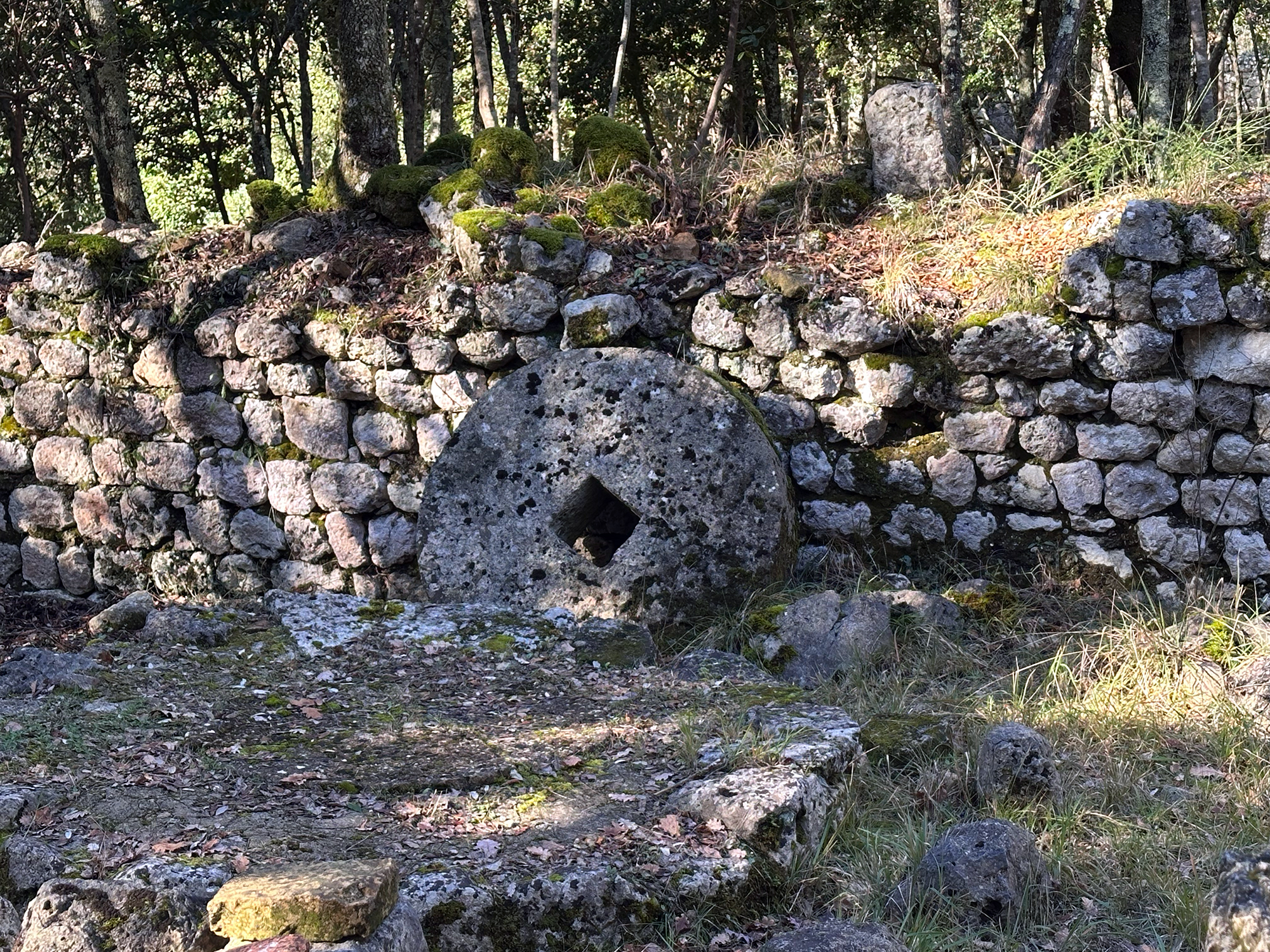
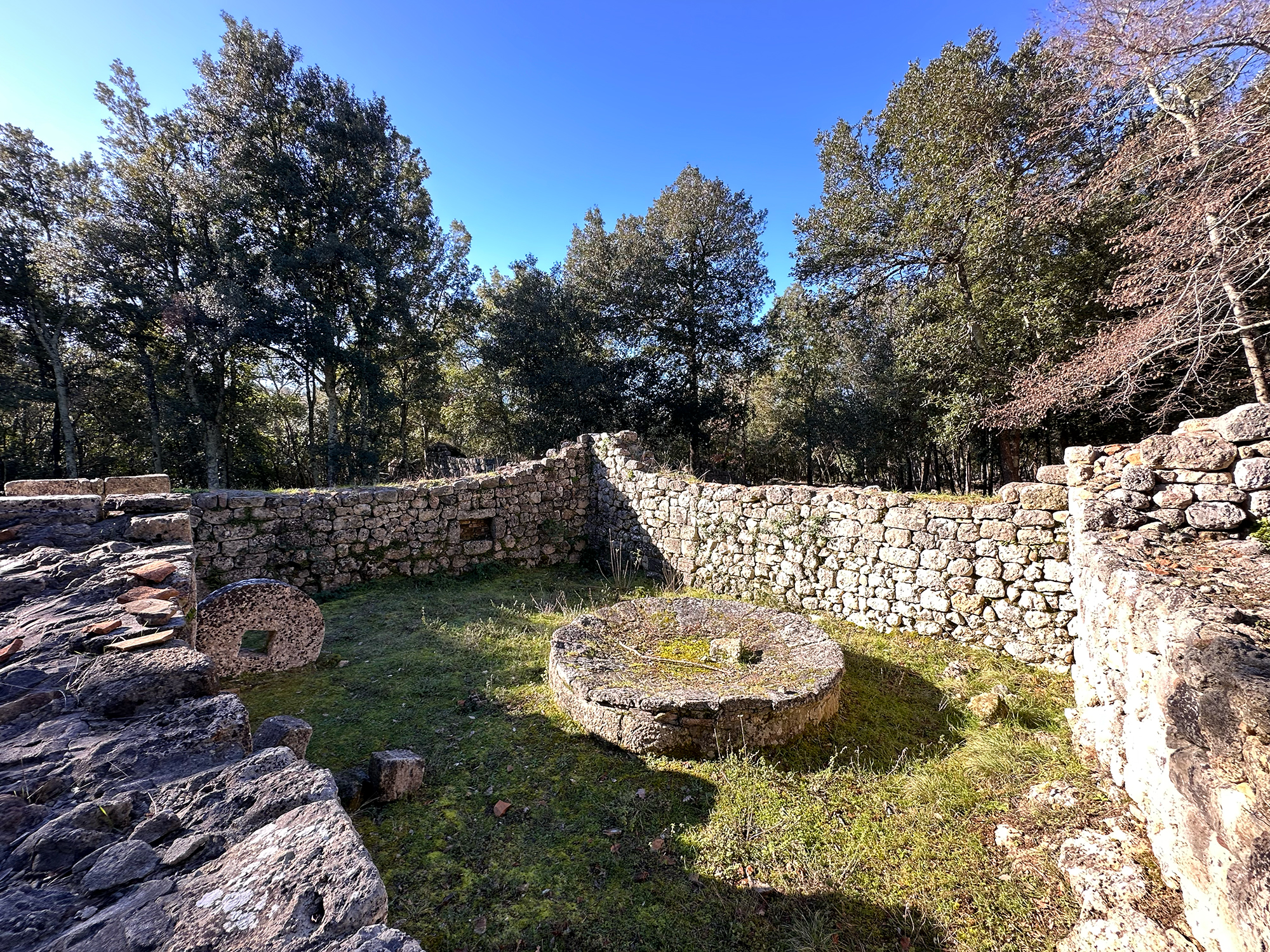
The remains of two mills are also identifiable, equipped with large stone millstones, indispensable for grain processing.
Conflicts, decline, and abandonment
In the 13th century, Castelvecchio was involved in border conflicts between San Gimignano and Volterra. Despite sieges and attacks, the citadel was never conquered by force, but only occupied through deception and betrayal, as in 1250 and 1268.
From the 14th century onward, with the loss of strategic importance and the construction of the new fortress of Castel San Gimignano, decline began.
The plague of 1348, subsequent epidemics, the earthquake of 1452, and increasing isolation led to depopulation. Despite recovery attempts, such as the reconstruction of the keep in 1450, Castelvecchio was definitively abandoned at the beginning of the 17th century.
Castelvecchio today
Today the site is part of the Castelvecchio Nature Reserve, established in 1996, which protects not only the ruins but also the surrounding wooded landscape.
Castelvecchio represents one of the most complete and legible examples of a medieval fortified settlement in the Val d’Elsa, a place where military architecture, daily life, and the relationship with the territory emerge with rare clarity.
More info & notes
The site is located on private property, is subject to archaeological restrictions imposed by the Superintendency, and lies within a protected regional park.
For these reasons, access is permitted only to visitors accompanied by authorized personnel from the Gruppo Storico Castelvecchio, a cultural association based in San Gimignano, which holds the necessary permits from both the property owner and the Superintendency.
Visits may be requested by email at gruppostoricocastelvecchio@gmail.com or by phone at +39 338 7530476.